
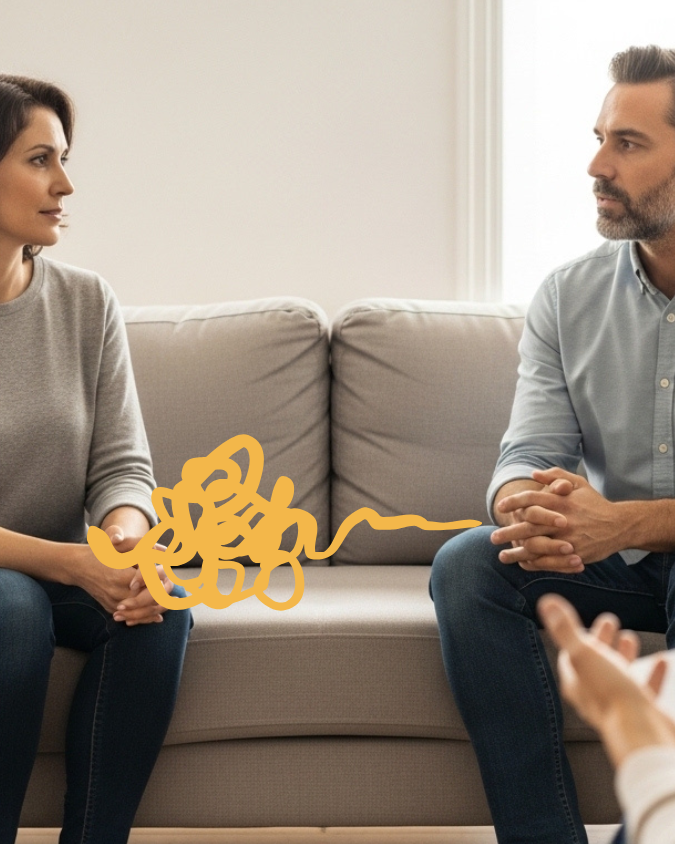
At a recent therapist consultation, one of the clinicians shared that she had gone through a divorce the previous year. Since then, she found it difficult to hold space for couples. She felt like a fraud giving advice on relationships when her own marriage had ended.
People are often searching for a “good” couples therapist. At one point, I considered taking on couples myself. But as a single, divorced mom, I wondered if my experience would make people less willing to see me. Would they question my credibility? Would they see me as someone who had somehow “failed” because my marriage didn’t last?
The Purpose of Couples Counseling
With time and reflection, I’ve come to realize that the purpose of couples counseling isn’t simply to keep people together. It’s to help people see clearly.
Sometimes that clarity leads to healing and reconnection. Sometimes it leads to the realization that the relationship is no longer healthy—or never was.
I think of one longtime client who entered couples counseling hoping things would improve. Instead, therapy helped her see the depth of emotional abuse she had been living with and recognize that her partner was not interested in meaningful change. Eventually, she left the marriage. I don’t consider that a failure. She is now thriving—financially, professionally, and personally. Therapy didn’t destroy her relationship. It helped her reclaim her life.
And yes, many couples do use therapy to grow closer. But the success of therapy isn’t measured by whether a couple stays together. It’s measured by whether the individuals inside the relationship become more honest, more aware, and more aligned with what is healthy for them.
The Five to One Rule
There are a few books and researchers that have deeply shaped how I understand relationships. One of the most influential is John Gottman. Imagine being able to sit with a couple for just ten minutes and predict, with over 90 percent accuracy, whether their relationship will last. It sounds almost mystical. But Gottman’s work isn’t based on intuition—it’s based on decades of research.
His key finding is surprisingly simple: stable, lasting couples maintain at least five positive interactions for every one negative interaction during conflict.
Five to one.
Those positive interactions don’t have to be grand gestures. They can be small: a smile, soft eye contact, a gentle tone, laughter, turning toward instead of away. These moments build emotional safety. They create resilience. They make repair possible.
When that ratio drops, relationships become fragile. Criticism replaces curiosity. Defensiveness replaces openness. Stonewalling replaces connection.
One at a Time

The real work of improving relationships often begins within the individual. Learning to regulate your nervous system. Learning to tolerate discomfort. Learning to stay open instead of shutting down.
Conflict itself isn’t the problem. Avoidance, contempt, and disconnection are.
Even though I don’t specialize in couples therapy, I work every day with individuals who want to function better in their relationships. And the truth is, relationship change often begins with one person doing their own work.
You don’t have to figure it out alone. NextTherapist has a roster of highly trained therapists with immediate openings who can help you navigate your relationship—whether that means rebuilding connection or finding clarity about what comes next.