

Recently, a client and I were talking about her yearly anxiety and depression around the holidays when she said something that felt like it belonged embroidered on a pillow:
“We’re trapped in tradition.”
If you work in the therapy world, you know the holidays can be some of the busiest—and most challenging—times of the year.
The Hidden Weight of Holiday Gatherings
Behind the lights, music, and expectations, there is often a quieter reality. This year alone, I received a message about a death by suicide in my own small community just days before Christmas. In another year, I learned that one of my clients had made local news headlines—and not in a good way.
The holidays do have joyful moments. But for many of my clients—especially those with complicated or dysfunctional family dynamics (which, to some extent, includes all of us)—the hardest part isn’t the season itself.

When Family Roles Never Change
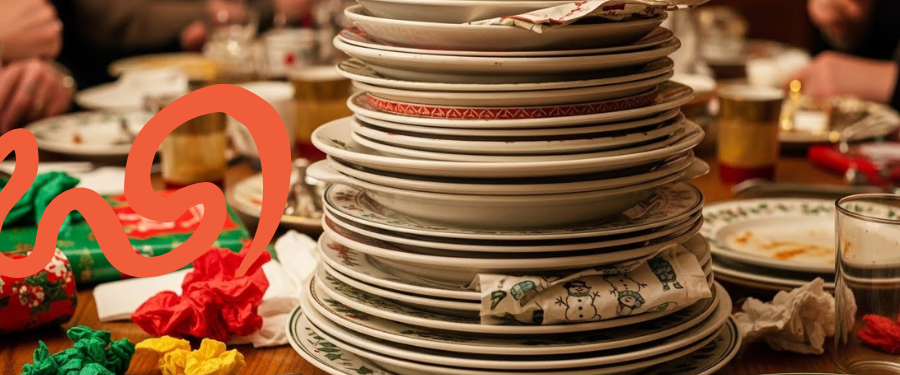
It’s the gathering. Christmas Eve. Christmas Day. The annual family party with the same cast of characters and the same familiar roles. The relative who has to outdo everyone else with how awful their boss is, how bad their back pain is, or how much worse their year has been than yours.
“Trapped in tradition” really stayed with me. It captures how many of us feel when we’re pulled back into old family systems. The same shows playing in the background. The same food no one actually enjoys. The same passive-aggressive comments. The same family members who don’t show up. The same ones who stay too long. The one family member who insists on hugging you every year—even though it makes you deeply uncomfortable.
For my client—the one who coined this very Instagram-worthy phrase—being “trapped in tradition” meant being shamed for her authentic self.
It provided a sense of control, which now leaves us exhausted and isn’t likely sustainable. We learned this somewhere and we became comfortable in this role…and it maybe it seemed like it worked for a while.
When Being Yourself is “Too Much”
In her family, her natural way of being was labeled too much: too loud, too enthusiastic, too expressive, too far outside the lines.
And it made me wonder—who drew those lines in the first place? Who decided we must eat the same terrible fruitcake every year if no one even likes it?
So if this year feels a little trapped, what do I suggest?
Take a cue from my client.
She knew she couldn’t rewrite the entire program. She couldn’t change the venue or skip the gathering altogether. So instead, she brought a portion of herself to the party—just enough to feel real. A little of her enthusiasm. A little of her creativity.

The Power of a Small, Authentic Disruption
She incorporated a Jimmy Fallon–esque lip-sync performance into an otherwise very reverent holiday gathering.
That one small shift transformed a party she dreaded into one where—for the first time—she felt like she could show up as herself.
So how do we decide what traditions to keep and which ones to let go?

Choosing Traditions That Actually Serve You
Maybe it takes us back to the Marie Kondo era and the simple question she asked about our closets: Does it bring joy?
Does the English Christmas pudding made with carrots and potatoes (this is an actual dessert in my family—and yes, it has lemon sauce) bring joy? Or is it something you continue out of guilt or pressure?
What about the Walmart candle you received from a sibling—the one you can’t stand, have no room for, and feel terrible giving away?
Either way, it may be time to make traditions more your own. Bring a little flexibility into the holidays—whether that means wearing the Tupac sweatshirt, bringing a non-homemade dish, ordering takeout Chinese food, or simply opting out of something you only do out of guilt.
Guilt is a terrible motivator. It rarely creates connection—and more often than not, everyone around you can sense how little joy you’re actually feeling.
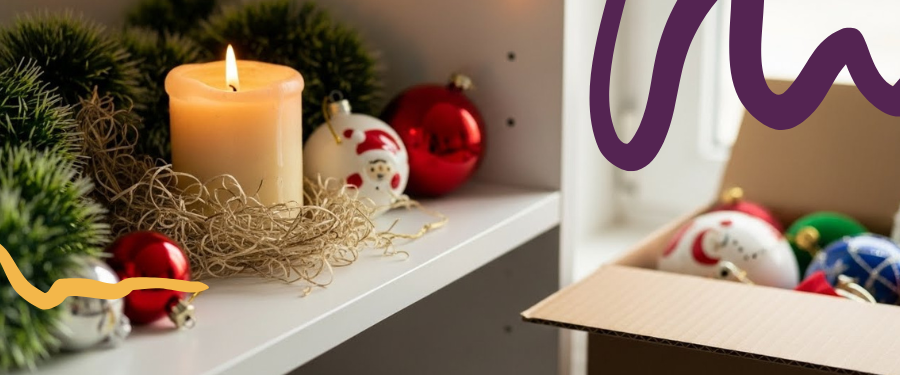
Traditions are meant to serve us, not trap us.
And sometimes the most meaningful change isn’t abandoning them altogether—it’s allowing yourself to show up a little more fully, exactly as you are.